Technology can expand a museum beyond its walls without replacing the physical experience. The practical opportunity is to use digital collections, mobile and immersive experiences, cloud platforms, analytics, and resilient operations to widen access, deepen learning, protect collections, and create stronger relationships with visitors, researchers, students, and donors.
For generations, museums have asked visitors to come to them. You traveled to a building, purchased a ticket, followed the signs, stood behind the velvet rope, and read a small placard.
The future of museums will not be limited by walls, operating hours, geography, or gallery capacity.
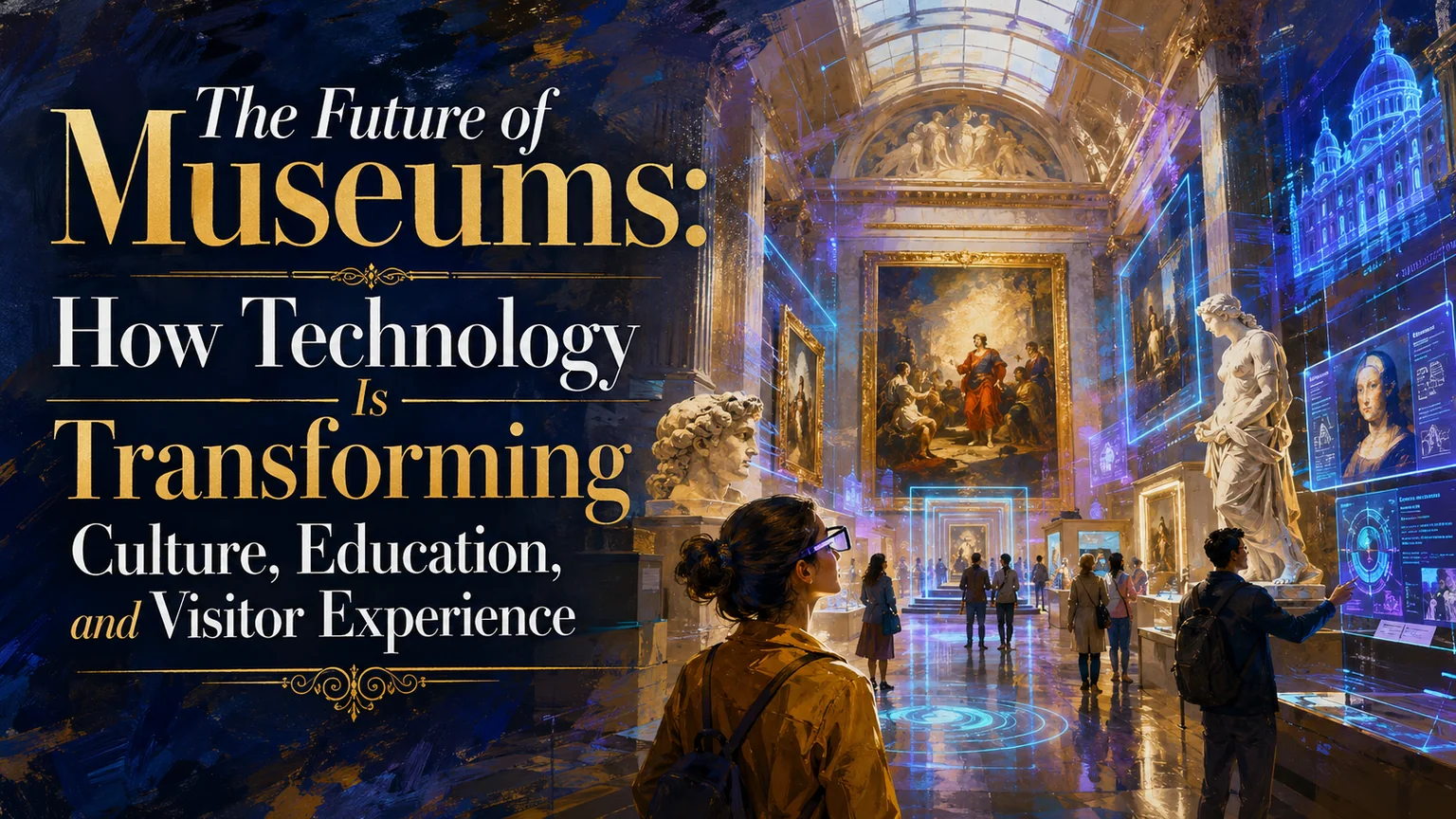
Technology is turning museums into always-available cultural platforms. Virtual reality can bring visitors inside a masterpiece. Augmented reality can place art in a city street. Mobile applications can become personal tour guides. Digital collections can reach students thousands of miles away. Cloud computing can support ticketing, fundraising, education, archives, and visitor analytics. Even digital twins may eventually help institutions protect buildings and collections while designing better exhibits.
As an IT leader who has spent more than two decades watching industries navigate digital transformation, I find this subject absolutely fascinating. Museums sit at the intersection of history, education, research, entertainment, philanthropy, and public service. That makes them a fascinating environment for modern technology.
The opportunity is not to replace the museum experience. The opportunity is to make it bigger, smarter, more accessible, and more resilient.
A Museum Is No Longer Just a Building
A physical museum will always matter. There is no digital substitute for standing beneath a massive dinosaur skeleton, walking through a historic aircraft, or seeing the brushwork of a painting with your own eyes.
The mistake is assuming the physical visit must be the entire product.
A modern museum can simultaneously serve gallery visitors, remote students, researchers, families planning trips, distant donors, and lifelong learners who may never visit in person.
That changes the strategic question. Museum leaders are no longer only asking how to bring more people through the front door. They are also asking how to bring the collection, the knowledge, and the mission to people wherever they happen to be.
Other industries have already made this transition. Banks became services rather than only branches, retailers became commerce platforms rather than only stores, and universities became learning ecosystems rather than only campuses. Museums are becoming cultural platforms rather than only destinations.
The Louvre Showed What Immersive Museum Technology Can Do
One of the clearest examples came from the Louvre Museum and its virtual reality experience, Mona Lisa: Beyond the Glass.
The project allowed participants to explore details that cannot be comfortably studied during a typical visit. Instead of looking at the painting from behind a crowd and a protective barrier, visitors could enter a digital environment built from scientific research, imaging, and three-dimensional design.
The experience explored Leonardo da Vinci’s methods, the physical changes the artwork experienced over centuries, and a reconstruction of how Lisa del Giocondo may have appeared when the portrait was created.
That is where virtual reality becomes far more than entertainment.
Used well, immersive technology can combine conservation science, historical context, curatorial research, and storytelling. It can reveal hidden layers, recreate missing architecture, demonstrate how an artifact was used, and place an artwork inside the culture that produced it.
The Louvre initially designed the experience for on-site visitors. When museum closures disrupted normal operations, the project also became available remotely. That shift demonstrated an important principle: a digital exhibit can begin as an enhancement to a physical visit and quickly become a global education platform.
The Pandemic Forced a Digital Transformation
Before 2020, many museums treated digital programs as useful additions. A virtual tour, online archive, mobile guide, or streamed lecture could be valuable, but it often sat beside the institution’s primary operating model rather than at the center of it.
Then buildings closed.
Admission revenue disappeared. School trips stopped. Fundraising events were canceled. Gift shops went quiet. Staff members had to find new ways to maintain relationships with members, donors, educators, and the public.
The American Alliance of Museums reported that surveyed institutions experienced enormous revenue pressure during the pandemic, with respondents losing an average of hundreds of thousands of dollars and anticipating major reductions in operating income.
This was not merely a website problem. It was an organizational resilience problem.
Museums with digital collections, online programming, modern communication tools, flexible infrastructure, and staff capable of producing digital experiences had more options. They could host virtual events, deliver remote learning, run online fundraising campaigns, publish behind-the-scenes content, and remain visible while their doors were closed.
The lesson for IT executives is familiar: digital maturity creates options when disruption arrives.
Digital Access Expands the Mission
The most exciting part of museum technology is not operational efficiency. It is access.
A child does not need to live in New York to explore the Museum of Modern Art or the Metropolitan Museum of Art. An architecture student does not need to travel immediately to experience the design of the Guggenheim Museum. Art lovers can explore collections connected to the Tate in London or the Uffizi Galleries in Florence through online cultural platforms and museum websites.
The Smithsonian Institution has spent years digitizing assets across an extraordinary network of museums and research centers. Its National Museum of Natural History provides digital resources that allow visitors to explore collections and educational material well beyond Washington, D.C.
The Art Institute of Chicago also offers virtual visits, collection exploration, video programs, audio experiences, and digital tools for planning a personal museum tour.
These programs can create the desire to visit. They help teachers build lessons, families plan trips, researchers find material, and people facing financial, physical, geographic, or scheduling barriers participate in cultural life.
A museum that digitizes its mission does not become less physical. It becomes more reachable.
The Technology Stack Is Becoming Part of the Exhibit
Museum technology used to be easy to identify. It was the audio headset, the video screen, or the kiosk in the corner.
Now the technology can be woven through the entire visitor journey.

Mobile Applications and QR Codes
A well-designed museum application can provide indoor navigation, accessibility support, language options, audio tours, exhibit recommendations, membership information, and personalized routes.
QR codes can connect a physical object to videos, interviews, conservation notes, three-dimensional models, related artifacts, and classroom material. They are inexpensive, familiar to visitors, and easy to update without redesigning an entire exhibit.
The key is restraint. Mobile technology should reduce friction and deepen curiosity, not become the main attraction.
Virtual Reality and Augmented Reality
Virtual reality can transport visitors into a reconstructed site, a vanished ecosystem, an artist’s studio, or the interior of an object too delicate to open.
Augmented reality can layer digital content onto the real world. A visitor might point a device at a fossil and see the animal move. A historic building could display an earlier version of itself. A sculpture trail could extend into public streets.
In 2019, the New Museum helped introduce augmented reality art walks across multiple cities. Projects like these expand the definition of an exhibit. The museum is no longer merely the place where art is stored. It can become the organization that curates an experience across an entire community.
Digital Twins and Conservation
A digital twin is a living virtual representation of a physical environment, system, or asset.
For museums, digital twins could support exhibit planning, building operations, environmental monitoring, emergency preparation, and conservation. Sensors can track temperature, humidity, light exposure, vibration, and air quality. A digital model can help teams understand how changes in a gallery may affect fragile objects. As with any connected environment, an infrastructure monitoring practice that turns signals into action is what makes that data operationally useful.
The same data that improves visitor comfort may also help protect an irreplaceable collection.
Cloud Computing and Data Platforms
Ticketing, donor management, membership, digital archives, video delivery, education programs, e-commerce, facilities systems, and analytics all generate data.
If each system operates as an island, the museum loses visibility into the relationship between ticket purchases, online events, donations, memberships, and collection interests.
A thoughtful cloud and data strategy can connect those interactions while respecting privacy and security. Managing cloud uncertainty through explicit placement, control, and recovery decisions helps institutions modernize without treating every workload or dataset the same. The result is not simply better reporting. It is a clearer understanding of how people engage with the institution.
That understanding can improve programming, fundraising, staffing, marketing, and exhibit design.
Museum Technology Can Strengthen Revenue and Resilience
Museums need mission, but they also need sustainable economics.
Digital transformation creates opportunities to diversify revenue without turning every artifact into an advertisement.
Potential models include:
- Paid virtual tours and premium educational programs
- Digital memberships with exclusive content
- Livestreamed lectures and curator sessions
- Online workshops for schools and families
- E-commerce tied to exhibits and collections
- Digital sponsorships
- Hybrid fundraising events
- Licensing of high-quality images and educational material
- Remote access programs for universities and corporate groups
The strongest strategy is a thoughtful mix of free access, membership value, educational services, donor engagement, and premium experiences. A remote lecture attendee may become a member, a teacher may pursue a school partnership, and a virtual visitor may plan an in-person trip. Technology expands the relationship funnel.
Responsible stewardship requires sustainable funding. Preserving history, protecting collections, paying skilled staff, and expanding access all require resources. A stronger digital model can help fund the mission rather than distract from it.
Small Museums May Have the Most to Gain
It is easy to look at the Louvre or Smithsonian and assume museum innovation requires an enormous budget.
It does not.
A smaller institution can begin with a focused, practical roadmap:
- Improve online ticketing and donations.
- Digitize the most important or requested parts of the collection.
- Build one excellent virtual tour instead of ten mediocre ones.
- Stream selected programs and workshops.
- Add QR codes to exhibits where deeper content adds value.
- Create a digital membership experience.
- Use analytics to understand what visitors actually engage with.
- Protect the environment with strong cybersecurity, backups, and access controls.
The Mt. Kearsarge Indian Museum in New Hampshire demonstrated how a smaller institution could use virtual tours, online workshops, and a virtual powwow to continue serving its community during disruption.
Smaller museums often preserve local history, Indigenous culture, regional industries, community art, and specialized collections that national institutions cannot. Technology can extend their reach without requiring an unlimited budget.
The IT Executive Playbook for the Future of Museums
Museum digital transformation should not begin with a shopping list. It should begin with outcomes.
Start With the Visitor and the Mission
Ask who is currently excluded, where friction exists, and what part of the collection could become more meaningful through technology.
The goal is not to install virtual reality because virtual reality is exciting. The goal is to solve an access, education, engagement, conservation, or revenue problem.
Build a Platform, Not a Pile of Projects
Disconnected applications, ticketing, donor databases, archives, and analytics create operational pain. Museums need architecture supporting identity, integration, data governance, content management, security, and future expansion. Open standards and well-designed application programming interfaces can reduce lock-in.
Treat Cybersecurity as Collection Protection
A ransomware attack can interrupt ticketing, lock staff out of systems, expose donor information, disrupt exhibits, and threaten digital archives.
Museum cybersecurity should include multifactor authentication, least-privilege access, tested backups, incident response, network segmentation, vulnerability management, vendor reviews, and staff education. The object behind glass deserves protection, and so does its digital history.
Design for Accessibility From Day One
Digital experiences should support captions, transcripts, screen readers, keyboard navigation, language options, readable interfaces, and multiple ways to consume content.
Accessibility is not a feature to add after launch. It is part of the museum’s public mission.
Measure Meaningful Outcomes
Page views are not enough.
Museums should measure educational participation, membership conversion, repeat engagement, donations, visits, accessibility, and community reach. The best metric connects technology investment to mission impact.
Keep the Human Experience at the Center
Museums are powerful because they connect people with real objects, stories, ideas, and one another. Technology should create context, remove barriers, and invite exploration, not make the museum feel like a software demo with better lighting.
What Is the Future of Museums?
The future museum is physical and digital, local and global, scholarly and entertaining, carefully preserved and constantly evolving.
It welcomes visitors through the front door, but it also reaches classrooms, living rooms, phones, libraries, and public spaces. It uses data without losing trust. It embraces immersive experiences without turning every gallery into an arcade. It modernizes infrastructure while protecting the authenticity that makes museums special.
Most importantly, it understands that technology is not the mission.
Technology is the multiplier.
It can multiply access. It can multiply learning. It can multiply engagement. It can multiply resilience. It can multiply the number of people who see themselves reflected in culture and history.
After more than twenty years in technology leadership, I have learned that the best digital transformations do not erase what came before. They preserve the value of the past while creating a better way to carry it forward.
Museums may be the perfect place to prove it.
Frequently Asked Questions About Museum Technology
How is technology changing museums?
Technology is helping museums create virtual tours, mobile guides, augmented reality exhibits, digital archives, personalized experiences, online education, contactless ticketing, and data-informed programming. It also supports conservation, security, fundraising, and operational resilience.
Will virtual museums replace physical museums?
No. Virtual experiences can expand access and deepen engagement, but physical museums offer direct encounters with objects, architecture, people, and place. The strongest future model combines both.
What technologies will shape the future of museums?
Virtual reality, augmented reality, mobile applications, QR codes, cloud computing, artificial intelligence, digital twins, environmental sensors, high-resolution imaging, data analytics, and cybersecurity will all play important roles.